Merging hamlets and residential groups: Streamlining the apparatus, enhancing the quality of grassroots cadres
The rearrangement of hamlets, villages, and residential groups is being implemented to realize the Party and State's policy on continuing to innovate the organizational apparatus, building a streamlined political system that operates efficiently, effectively, and with high performance. For Thai Nguyen Province, this process is not only about reducing the number of focal points in residential areas but also linked to the requirement of consolidating grassroots organizations, concentrating resources, and standardizing the cadre team to meet the tasks in the new period.
Van Han Commune People's Committee holding a Conference to gather public opinions on reorganizing villages in the commune
Reorganizing for more effective operations
Along with the process of socio-economic development, urbanization, and population shifts, many hamlets and residential groups are currently no longer suitable in terms of scale. In some places, the number of households is small, and the area is limited, yet all positions in the residential area are maintained; while some areas with rapidly increasing populations have new management requirements. The rearrangement thus becomes an objective requirement to ensure the organizational apparatus aligns with practical conditions.
Implementing the Central Government's policy, Thai Nguyen Province has developed a plan and implementation scheme with a specific roadmap. Localities are reviewing the current status of population, natural conditions, historical and cultural factors, customs, and traditions; at the same time, assessing the impact of the rearrangement on the lives of the people and the operations of the grassroots political system.
One of the requirements that the province pays special attention to is ensuring democracy, transparency, and creating consensus among the People. The process of soliciting voter opinions is carried out in accordance with regulations, helping people directly participate in contributing ideas to the rearrangement plan. This is an important factor that helps limit arising concerns and, at the same time, creates consensus during the implementation process.
People of Doan Ket hamlet, Bach Thong commune voting on the hamlet merger policy
According to the proposed plan, the entire province will reduce from 3,145 hamlets, villages, and residential groups to 1,416 units, a reduction of 1,729 units, equivalent to about 55% of the current total. After rearrangement, the new residential units will have a more appropriate scale, facilitating leadership, management, and the implementation of development tasks at the grassroots level.
The effectiveness of the rearrangement is not only reflected in the reduction of focal points. When residential units have a more reasonable scale, investment resources for infrastructure, culture, environment, and community activities are also concentrated more effectively. The operations of Party Cells, Fatherland Front working committees, and mass organizations will be more convenient in implementing movements, campaigns, and political tasks in the locality. In addition, reducing the number of focal points also contributes to enhancing the effectiveness of leadership and administration by Party committees and commune-level authorities. Tasks are implemented more uniformly, reducing the dispersion of resources and personnel, creating conditions for localities to focus on achieving socio-economic development goals in the new period.
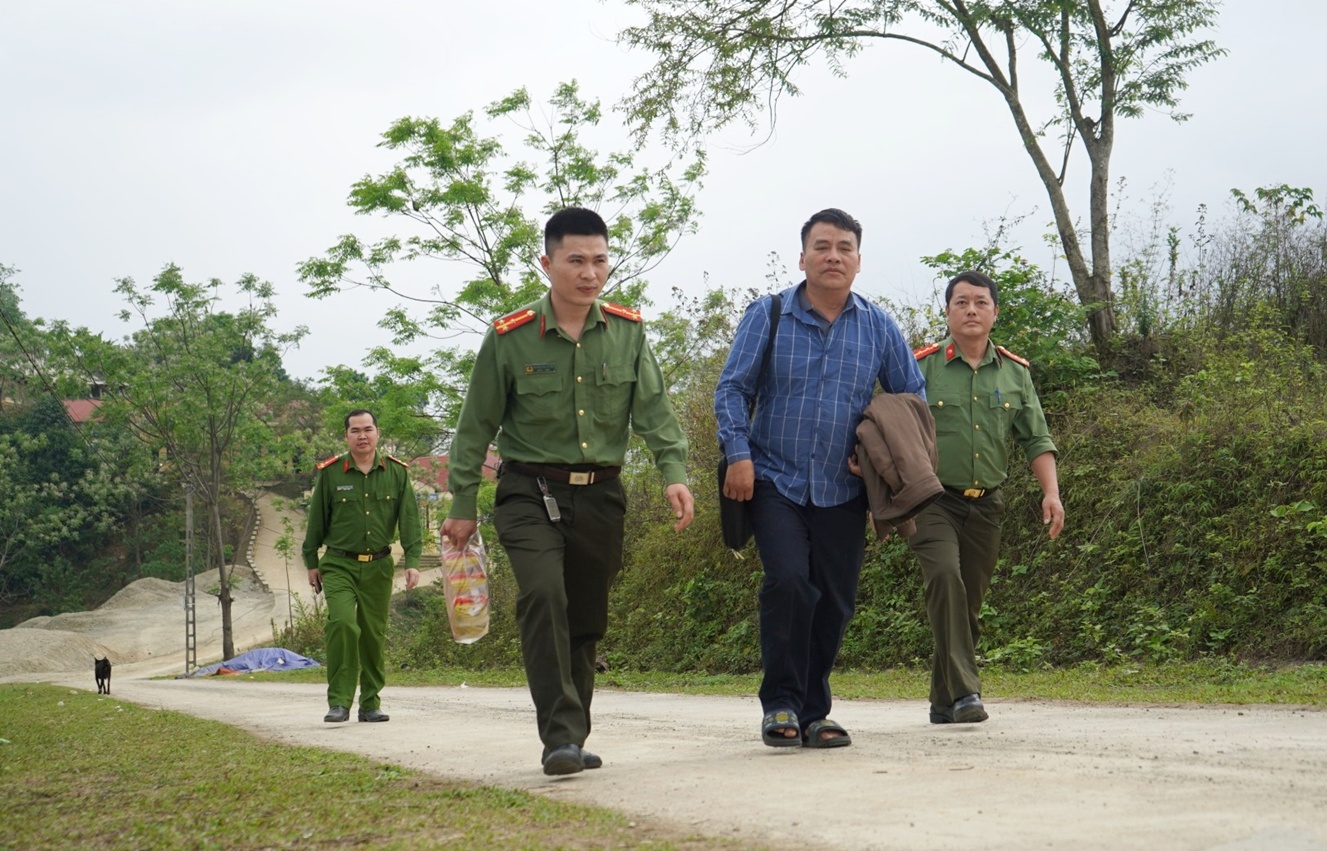
Mr. Duong Van Hau, Secretary of Pu Lung hamlet Party Cell, Nam Cuong commune, along with police forces, assesses the situation and disseminates laws to the people of Pu Lung hamlet
Grassroots cadres facing new requirements
If the rearrangement of hamlets and residential groups is a necessary condition, then the team of cadres in residential areas is the decisive factor for the operational effectiveness of the apparatus after rearrangement. When the population scale is larger, the area is wider, and the workload increases, the requirements for Party Cell secretaries, hamlet chiefs, and residential group leaders are also higher than before.
In reality, cadres in residential areas are the force directly implementing the Party's policies and the State's laws to the people. These are also the people closest to the public, regularly grasping the grassroots situation, reflecting the aspirations of the People, and participating in resolving issues arising directly in residential areas.
Stemming from that requirement, the Thai Nguyen Provincial Party Standing Committee has issued Temporary Regulations on the Standards for Party Cell Secretaries of Hamlets and Residential Groups. Accordingly, Party Cell secretaries must meet standards regarding political steadfastness, moral qualities, prestige in the community, organizational discipline, leadership capacity, educational level, and health. These are important criteria to ensure that the head of the Party Cell has sufficient conditions to fulfill the core leadership role in residential areas.
Ms. Hoang Thi Sin (wearing a hat), Secretary of Phieng Cuon hamlet Party Cell, Na Ri commune, visits a seedless persimmon cultivation model in the hamlet
A notable point is that the Regulations have supplemented the requirement for the ability to use smart devices and digital platforms to serve Party work, management, administration, and work exchange. Along with this is the capacity for propaganda, mass mobilization, the ability to grasp the local situation, and skills in mediation and handling issues arising at the grassroots level. These are all requirements directly linked to the daily tasks of Party Cell secretaries in conditions where residential units after rearrangement have a larger scale than before.
The orientation towards rejuvenating the grassroots cadre team is also mentioned in the Regulations. Party members with professional qualifications, information technology application capabilities, and innovative thinking are encouraged to assume positions in residential areas. At the same time, the province still focuses on selecting prestigious individuals with practical experience and the ability to mobilize the People.
The rearrangement of hamlets and residential groups and the standardization of the grassroots cadre team are two closely related tasks. A streamlined apparatus can only truly be effective when operated by a team of capable, responsible cadres who meet the task requirements. Conversely, a scientifically organized and unified working environment also creates conditions for cadres to better promote their capabilities and roles. Therefore, the results of the rearrangement policy need to be viewed comprehensively, not just in the reduced number of focal points, but more importantly in the quality of operations of the grassroots political system, the effectiveness of serving the People, and the ability to meet the development requirements of each locality. When the apparatus is streamlined, and the grassroots cadre team is selected, standardized, and properly fulfills its role, the hamlets and residential groups after rearrangement will have additional conditions to operate steadily and effectively, truly becoming an important foundation in building a government close to the people, serving the people better.