16/09/2026
Guidance on collecting and recycling end-of-life solar panels
The Thai Nguyen Department of Agriculture and Environment has issued guidance on managing, collecting, recycling and treating solar panels and electrical equipment after the end of their useful life, in order to meet environmental-protection requirements and fulfill recycling responsibilities in rooftop solar development.
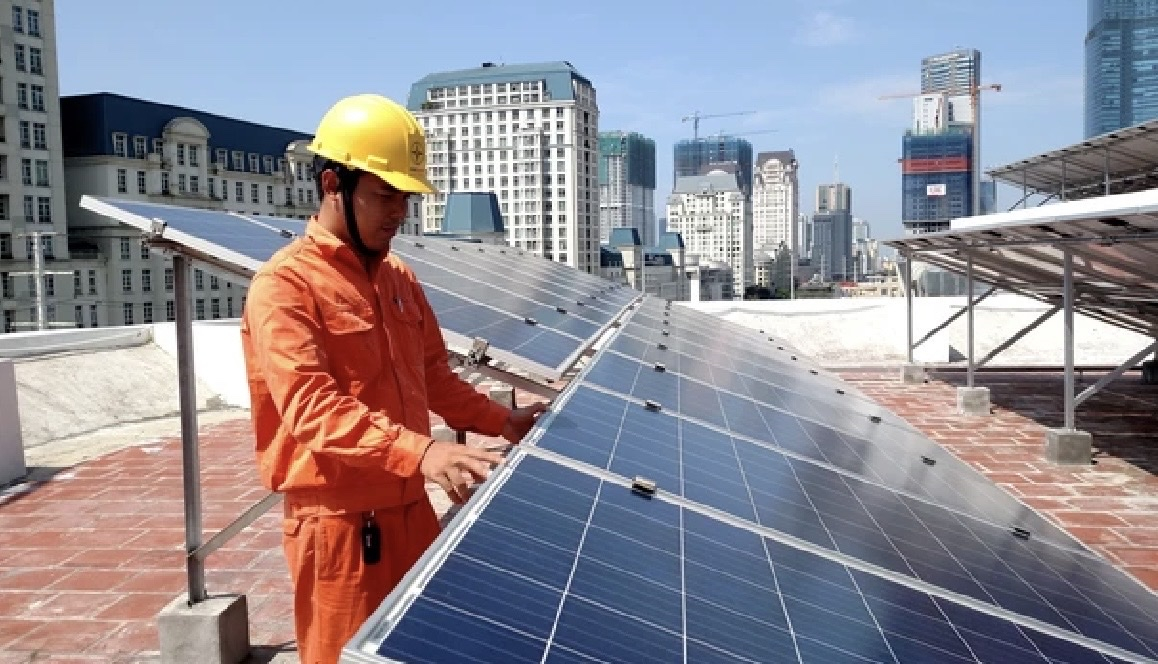
Managing, collecting, recycling and treating end-of-life solar panels and electrical equipment helps meet environmental-protection requirements (Illustrative photo)
Under the guidance, discarded photovoltaic panels, energy-storage batteries and accumulators must be strictly managed from generation, classification and temporary storage through recovery, recycling and treatment; they must never be buried or discarded with household waste. Dismantling and storage must ensure technical safety and prevent fires, explosions, and leakage of heavy metals and chemicals that could contaminate soil and water sources.
Discarded photovoltaic panels are classified as controlled industrial waste. Waste generators are responsible for collecting samples for analysis to determine the applicable waste classification; if they do not do so, the waste must be managed and treated as hazardous waste. Lead-acid, lithium-ion and NiMH batteries, as well as rechargeable batteries used in ESS/BESS energy-storage systems, constitute hazardous waste with fire, explosion and risks of chemical toxicity and must be strictly collected, stored and treated.
When equipment is damaged or reaches the end of its service life, investors, households and agencies using solar power must arrange safe dismantling and completely disconnect power sources; they must not smash panels or crack batteries and accumulators, which could cause chemical leakage. The equipment must be segregated and must not be mixed with household waste.
Mandatory recycling rates of 3% for photovoltaic panels, 12% for lead-acid batteries, and 8% for other batteries and rechargeable batteries (Illustrative photo)
While awaiting transfer, equipment must be stored in a covered area with an impermeable floor and runoff-collection measures. Cracked panels and leaking batteries or accumulators must be tightly wrapped in suitable material. Waste generators must transfer equipment through official take-back points announced by manufacturers, importers or organizations responsible for recycling, or to treatment facilities holding an appropriate environmental permit. Transfer records and documents must be retained for five years.
For manufacturers and importers, recycling photovoltaic panels, batteries and energy-storage accumulators is mandatory. Enterprises must register annual recycling plans on the national EPR Information System before April 1, organize recycling in accordance with regulations, and report implementation results. Enterprises that do not organize recycling themselves may make the required financial contribution to support recycling in accordance with regulations.
The Department of Agriculture and Environment has requested People’s Committees of communes and wards to strengthen communication and guidance for residents and organizations using rooftop solar power, support the establishment of collection points, and step up inspections to prevent unauthorized dismantling, recycling, burial or improper disposal of equipment. These measures will help control waste from solar power, protect the environment and promote the circular economy in the province.
Huong Lan
thainguyen.gov.vn