Thai Nguyen is poised to seize major opportunities to expand its development space, strengthen regional connectivity, and enhance competitiveness. To realize these goals, the province is mobilizing resources to invest in infrastructure, particularly transport infrastructure. Alongside projects already completed and put into operation, a series of key transport projects are being implemented or prepared for investment, laying the groundwork for sustained long-term growth.
The regional link road connecting Thai Nguyen, Bac Ninh, and Phu Tho (section in Quan Chu commune, Thai Nguyen Province)
Expanding development space through strategic connectivity corridors
Throughout the socioeconomic development process, transport infrastructure has consistently played an important role in connecting economic spaces, shortening geographical distances, and facilitating the flow of resources. For Thai Nguyen, this need has become even more pronounced as the province enters a new stage of development, with a broader development space, greater requirements for regional connectivity, and more ambitious growth targets.
In recent years, many transport projects in the province have been invested in, completed, and put into operation, helping improve Thai Nguyen's connectivity with surrounding localities. Building on this foundation, Thai Nguyen continues to concentrate resources on larger projects with a wider connectivity reach, aiming to establish a synchronized interprovincial and interregional transport network.
Notably, projects under implementation or being prepared for investment are forming complementary connectivity directions. To the south, links with Hanoi and the Hanoi Capital Region run through the CT.07 Expressway and Ring Road 5. To the north, connectivity with Cao Bang is being expanded. To the east, the focus is on Lang Son and its border-gate system. To the west, connections are being opened with Tuyen Quang and Phu Tho. At the same time, the proposed Tam Dao tunnel continues to open a new connection between Thai Nguyen, Phu Tho, and Hanoi. This demonstrates a clear shift in the approach to transport planning: it is being considered within the overall planning of development space and linked with industry, urban development, logistics, trade, tourism, and regional connectivity.
Rendering of the investment project to complete the CT.07 Expressway on the Hanoi–Thai Nguyen–Cho Moi section, under which the Hanoi–Thai Nguyen section is to be upgraded to six lanes
The investment project to complete the CT.07 Expressway on the Hanoi–Thai Nguyen–Cho Moi section provides a clear example. The project was approved by the Thai Nguyen Provincial People's Committee under a public-private partnership (PPP) arrangement in June 2026 and broke ground on June 30, 2026. It is a key project intended to complete the transport network connecting the northern midland and mountainous region with Hanoi while enhancing the capacity of the existing expressway. Under the announced plan, the project has a total length of 99.03 km. The 59.93-km Hanoi–Thai Nguyen section is to be upgraded to a fully developed six-lane expressway with a design speed of 100 km/h; the 39.1-km Thai Nguyen–Cho Moi section will retain four expressway lanes, with a design speed of 80–100 km/h.
Once the Hanoi–Thai Nguyen–Cho Moi corridor is completed and further integrated into the northern expressway network, Thai Nguyen will be better positioned to serve as a connectivity hub between Hanoi and the northern midland and mountainous region. Flows of goods, passengers, and investment resources will move more conveniently, creating further room for industrial, service, and logistics development.
Along this same connectivity direction, localities are actively coordinating preparations for investment in the Bac Kan–Cao Bang Expressway. The route has a total length of approximately 82.5 km, including about 60.66 km through Thai Nguyen. It is planned as a four-lane expressway with a design speed of 80 km/h and estimated investment of approximately VND 29.3 trillion, to be implemented during 2026–2029. During the preparation process, Thai Nguyen and Cao Bang agreed on a coordination mechanism focused on matters involving documentation, land clearance, resettlement, materials, and land and environmental procedures. Both localities regard the project as important to completing regional infrastructure connectivity, expanding the space for linkages, and establishing a more convenient transport corridor between northern provinces and international border-gate areas.
While CT.07 and the Bac Kan–Cao Bang Expressway build additional north–south connectivity capacity, the Thai Nguyen–Lang Son Expressway will open a new development direction toward the northeast. The route is expected to be about 120 km long, including approximately 50 km through Thai Nguyen, with four lanes, a design speed of 100 km/h, and preliminary investment of around VND 29 trillion. Thai Nguyen has proposed being designated as the project managing authority and has also requested medium-term public investment resources for 2026–2030. Once completed, the expressway will connect the Lang Son border-gate area with Thai Nguyen's industrial center and northwestern provinces, creating further conditions for the development of industrial parks, logistics centers, urban areas, and border trade. More importantly, it will add a link to the interregional expressway network, giving Thai Nguyen greater access to major economic corridors.
Building an interconnected network and creating room for long-term growth
Conference on implementation options for the Tam Dao Tunnel Project in Phu Tho Province, August 5, 2026
Another route being prepared by Thai Nguyen is a link road to Tuyen Quang. The Provincial People's Council has approved the project's investment policy, with total investment of VND 5.87 trillion, including VND 5.08 trillion from the central budget and VND 790 billion from the local budget. The route will be approximately 31.5 km long, linking Provincial Road 261 with the road connecting Thai Nguyen, Bac Ninh, and Phu Tho provinces at the border with Tuyen Quang Province; it is to be implemented during 2026–2030. Once synchronously connected with key expressways and national highways, the route will help distribute traffic, shorten the transport time for goods and passengers, and expand access to industrial and service centers.
In another direction, the investment project to build the Tam Dao Tunnel connecting Thai Nguyen Province, Phu Tho Province, and Hanoi (referred to as the Tam Dao Tunnel Project) is being jointly prepared by Thai Nguyen and Phu Tho. At the conference on August 5, 2026, the two localities agreed to advance procedures for preparing the project connecting Thai Nguyen, Phu Tho, and Hanoi. Once completed, the route could shorten the current journey by about 40 km, strengthen connectivity with Hanoi, and create new development space for the Tam Dao area. Notably, the project could also connect the eastern slope of Tam Dao in Thai Nguyen with the western slope of Tam Dao, an area with substantial potential for ecotourism, resort tourism, and culture. As transport improves, landscape, cultural, and tourism assets will be better connected and utilized more effectively.
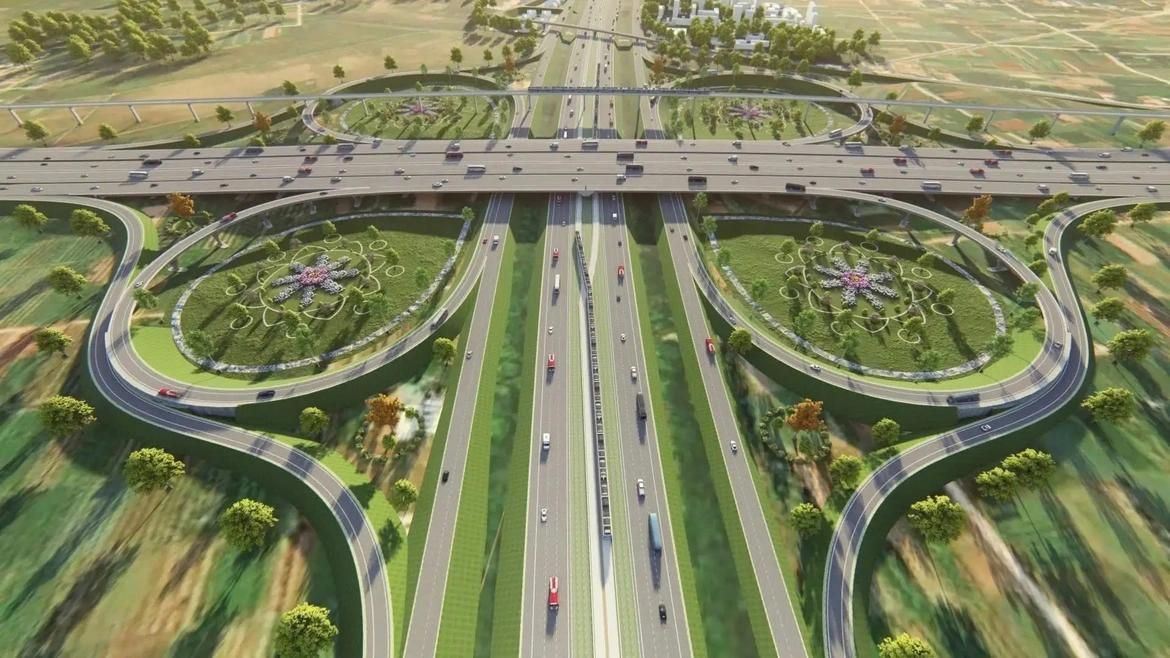
Rendering of the Ring Road 5 section through Thai Nguyen Province, planned as a four-lane route connecting the Hanoi–Thai Nguyen Expressway with Bac Ninh
Within the emerging transport network, Ring Road 5 of the Hanoi Capital Region holds a special position. The Thai Nguyen Provincial People's Council issued Resolution No. 310/NQ-HDND dated July 17, 2026 on allocating local budget capital for the 2026–2030 period, with expected total funding of VND 7.787 trillion for the section passing through the province. Of this amount, approximately VND 3.082 trillion is allocated to compensation, support, and resettlement, while approximately VND 4.705 trillion is allocated to construction of parallel roads.
Ring Road 5 is highly significant to strengthening links between Thai Nguyen and the Hanoi Capital Region. Within the province, the route has been built with four lanes, connects with the Hanoi–Thai Nguyen Expressway and Bac Ninh, and passes through numerous industrial parks and clusters. In the coming period, it is oriented to become a corridor for industry, logistics, and interprovincial and interregional connectivity. It also most clearly demonstrates the relationship between transport and the organization of economic space. When a major route is formed, industrial, urban, commercial, and logistics spaces can be organized appropriately along new development corridors.
Delegation from Thai Nguyen and Phu Tho provinces surveying the proposed site for the Tam Dao Tunnel Project at Xa Huong Lake in Tam Dao commune, August 5, 2026
From CT.07 and Ring Road 5 to the Bac Kan–Cao Bang, Thai Nguyen–Lang Son, and Thai Nguyen–Tuyen Quang expressways and the Tam Dao tunnel, Thai Nguyen's transport network is clearly expanding in multiple directions and gradually forming interprovincial and interregional connectivity corridors. This provides a foundation for the province to capitalize on its geographical advantages, enhance connectivity, increase its appeal to investment flows, expand markets for businesses, and create further momentum for socioeconomic development. Alongside investment in transport works, organizing industrial, urban, commercial, and logistics spaces along the new connectivity corridors also opens considerable development potential. When transport infrastructure is synchronously invested in alongside planning, each route creates value beyond the project itself, helping shape new development spaces and generate broader spillover effects.
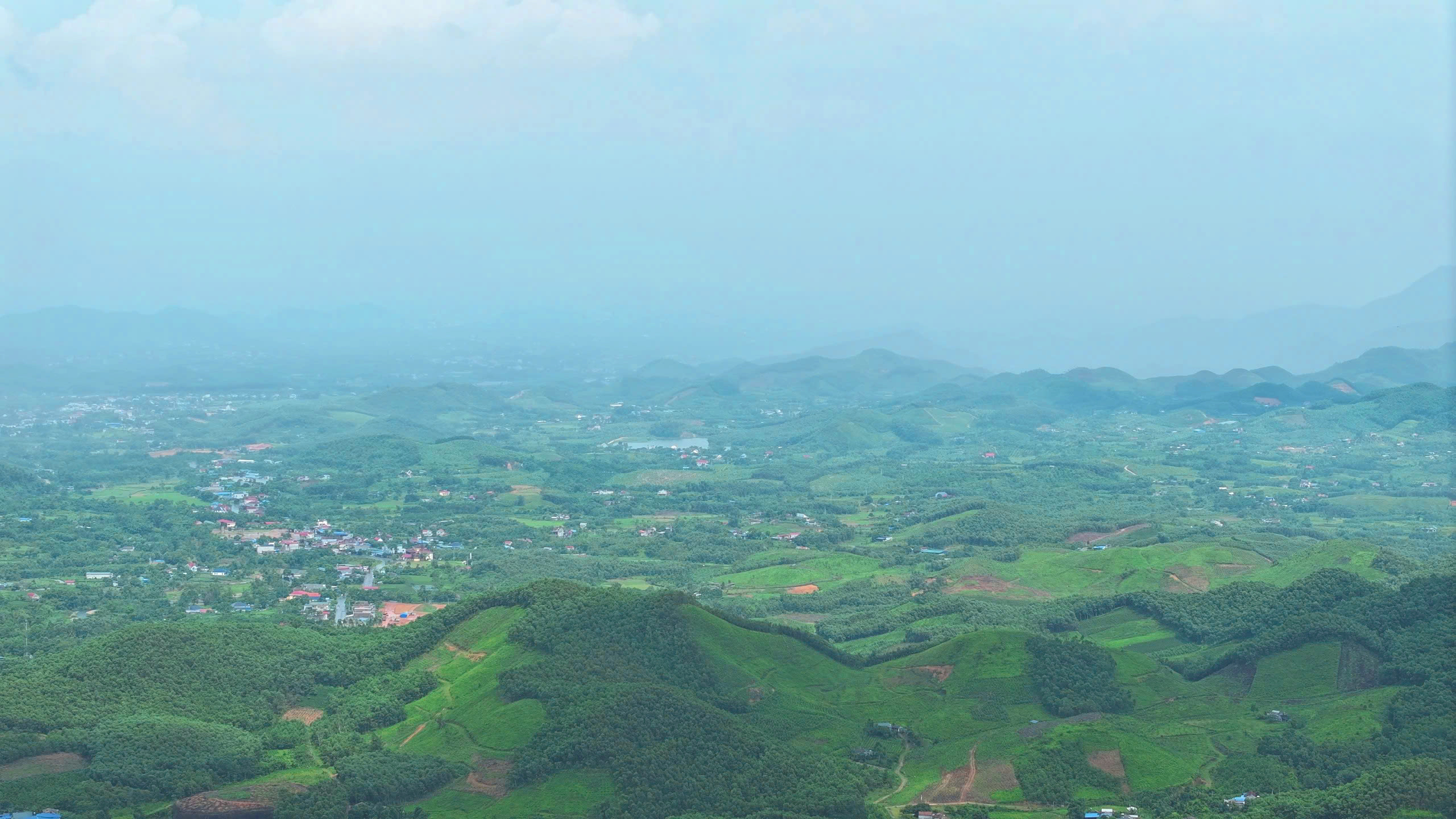
Part of Quan Chu commune, where options are being studied for a tunnel through the Tam Dao range
Experience from project implementation shows that concentrating resources on transport infrastructure development is creating an additional foundation for Thai Nguyen to expand its economic space and strengthen regional connectivity. As key projects are gradually completed, the transport system will more closely link areas within the province with economic centers, transport corridors, and new development spaces. This is an important condition for using resources effectively, improving competitiveness, and creating room for growth in the coming period.
From a long-term perspective, transport projects under implementation and in preparation for investment have significance beyond the scope of each individual work. The formation of a synchronized connectivity network will help shape Thai Nguyen's development space in the coming years, enabling industry, urban development, trade, logistics, and tourism to develop in line with the advantages of each area. It is also an important part of building an infrastructure foundation for the province's long-term and sustainable development.