From its specialty tea-growing areas and abundant mineral resources to its electronics industry base and emerging technology ecosystem, Thai Nguyen has an opportunity to transform existing strengths into high-value-added strategic technology products. In implementing Resolution No. 57-NQ/TW of the Politburo, the province has identified science, technology, innovation, and digital transformation as drivers for leveraging its competitive industries, creating new value chains, and fostering rapid and sustainable socio-economic growth and development in the new period.
Tan Cuong Xanh Company Limited operating an automated tea-processing line
Politburo Resolution No. 57-NQ/TW dated December 22, 2024 identifies the development of science, technology, innovation, and digital transformation as a foremost breakthrough and the main driver of modern productive forces and socio-economic development. In Thai Nguyen, that vision is being realized by integrating technology across all industries, with a focus on sectors in which the province has advantages, and by changing how value is created instead of merely expanding production scale.
At numerous meetings and working sessions, Chairman of the Provincial People's Committee Vuong Quoc Tuan has emphasized that Thai Nguyen has identified three strategic technology product groups for focused development in the period ahead: processes for tea cultivation, production, and processing; mineral extraction and deep processing; and the semiconductor industry. This selection is grounded in existing strengths and reflects the province's new development mindset: using those strengths as the foundation, science, technology, and innovation as the drivers, and added value and competitiveness as the benchmarks. In this way, the province is gradually transforming its resources, traditional products, and existing industrial base into high-technology-content products and participating more deeply in domestic and global value chains.
From the "land of the finest tea" to high-value technology products
Thai Nguyen has long been known as Vietnam's "tea capital", where tea is not only a key crop but also closely linked to the province's culture, livelihoods, and brand. After years of development, the tea industry now faces a new requirement: not merely to produce more, but to generate greater value from every unit of output by applying science and technology and ensuring that every stage from production through processing follows scientifically defined parameters to produce clean and safe products.
Application of science and technology throughout tea production and processing, with scientifically defined parameters to ensure clean and safe products
By the end of June 2026, Thai Nguyen had 22,200 ha of tea. Notably, nearly 6,670 ha had received VietGAP or organic certification, while 204 tea products across the province had achieved three- to five-star OCOP ratings, including six national five-star OCOP products. From its large growing areas to products that are increasingly standardized and improved in quality and value, these figures show that Thai Nguyen tea not only has an output advantage but is also gradually building a strong foundation for developing a high-quality tea product chain.
As markets increasingly value quality, transparency, and traceability, however, advantages in area or output will no longer be the sole deciding factors. The value of tea will depend increasingly on raw material quality, processing technology, product standards, branding, and market access. This is why Thai Nguyen is introducing science, technology, and digital transformation into every stage of the tea industry's value chain.
Under the Tea Industry Digital Transformation Plan for the 2026-2030 period, the province aims to establish an integrated digital ecosystem for the tea industry, shifting from traditional, fragmented production and manual management to governance based on data, quality standards, traceability, digital branding, and online markets. By 2030, the province aims for at least 70% of its tea-growing area to have digital records and GIS mapping data, and for 100% of planting-area code records to be managed, updated, and monitored in a digital environment.
Technology is therefore being introduced into the tea industry starting with the growing areas. Standardized data on acreage, growing areas, cultivation processes, output, and quality will provide a foundation for better management from production through processing and distribution. Digital logs, traceability, product identification and "digital passports", the digitalization of processing, production governance, and quality control have also been identified as key tasks.
According to the Department of Science and Technology, 149 tea planting-area codes across the province have now been geolocated using the Global Positioning System (GPS) for monitoring, management, and traceability in accordance with regulations. The coded growing areas cover more than 900 ha and have an estimated fresh tea bud output of 11,300 metric tons, including 84 codes for areas serving the domestic market and 25 for areas serving exports. Planting-area codes not only enable the precise identification of raw material origins, but also facilitate the management of standardized production processes, meeting requirements for information transparency, food safety, and quality control. This also provides an important foundation for Thai Nguyen's tea industry to participate more deeply in modern agricultural value chains and meet the increasingly stringent requirements of domestic and international markets.
La Bang Tea Cooperative using technology and machinery to process tea products
At the same time, cooperatives, businesses, and tea-growing households across the province are gradually introducing technology into processing, thereby diversifying products and increasing the value of tea. Closed-loop tea-firing, rolling, and drying lines and cold-drying systems help control temperature and preserve the color, aroma, and quality of tea buds. Many producers have developed product lines including tea bags, instant tea, green tea powder, herbal tea, and tea-based beverages. Through technology and creativity, fresh tea buds are increasingly being transformed into high-value-added tea products, expanding markets and bringing the Thai Nguyen Tea brand closer to consumers.
From mineral resources to high-tech materials
While tea is Thai Nguyen's signature agricultural advantage, minerals are among the foundations that have shaped the province's industrial profile. With diverse and valuable resources including tungsten, titanium, lead-zinc, iron, tin, gold, and coal, Thai Nguyen has a major advantage in metallic minerals in the Northern Midlands and Mountainous Region. Under the province's development orientation, these resources will be directed toward deep processing and high-technology-content products in the new period, generating greater added value from every unit of resources.
Under its planning, Thai Nguyen aims to develop 27 mineral-processing plants. The province already has a system of mineral-processing plants, beneficiation facilities, and other processing establishments, providing a foundation for further technological upgrades and value creation.
Masan High-Tech Materials Corporation deploying its German-imported technology to move high-tech products up the value chain
One notable direction is the tungsten product chain. From extraction and ore beneficiation to the production of higher-value products, this processing chain is creating opportunities for Thai Nguyen's resources to participate more deeply in modern industries. The most important outcome is not simply another mineral product, but materials for other technology industries.
Under the province's orientation, ultrafine tungsten powder can be developed into tungsten carbide, superhard materials, and products for precision engineering, electronics, aviation, and semiconductor manufacturing. For lead-zinc, development extends beyond metals to materials for energy-storage batteries, alloys, specialty chemicals, and other technology fields. For titanium, the value chain is oriented toward titanium metal, titanium alloys, and products for aviation, biomedicine, chemicals, and energy. A metric ton of ore that is only extracted and beneficiated has an entirely different value from one transformed into a material with special properties or an input for precision engineering, electronics, or other high-tech industries. Advanced technologies must therefore be applied from exploration and extraction through processing to minimize resource waste and elevate the value of the province's valuable resources.
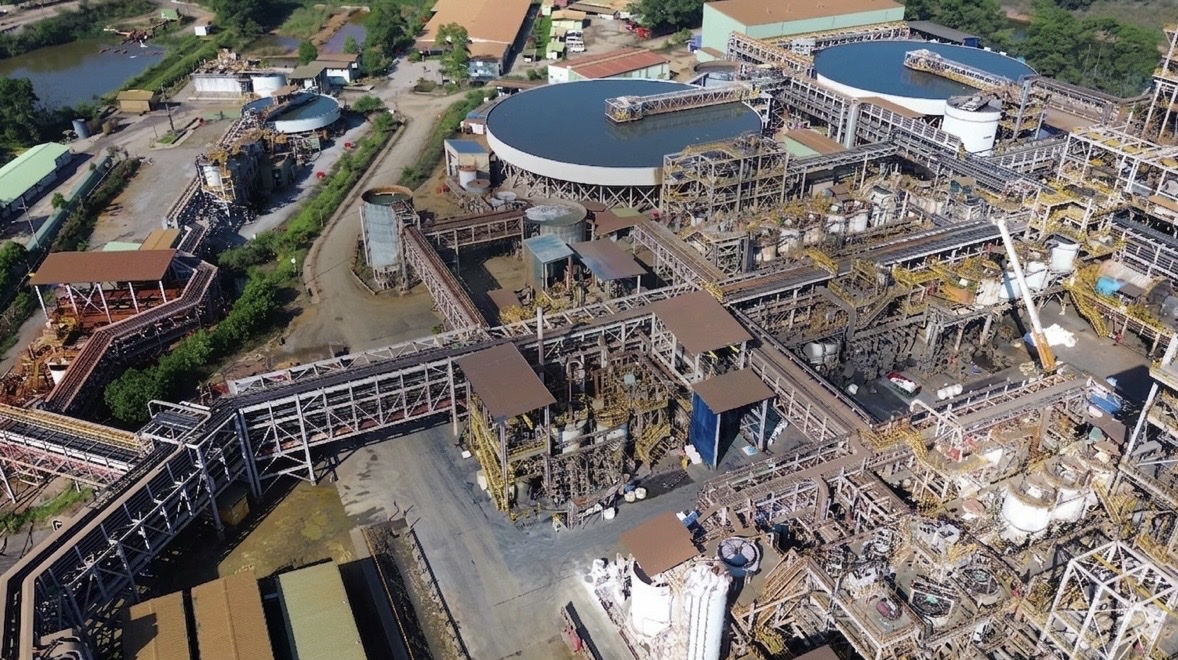
Masan High-Tech Materials Corporation, accounting for approximately 21% of global tungsten supply outside China, gradually affirming its role as a vital link in the global strategic materials value chain
As the province concurrently develops deep-processing industries, new materials, and high-tech industries, their value chains can become interconnected and gradually form a more sophisticated production ecosystem. Mineral resources could then generate not only jobs, revenue, and metallurgical products, but also inputs for the industries of the future. This orientation clearly demonstrates the province's determination to change its resource-based growth model by extracting resources responsibly, using them efficiently, limiting raw-material exports, expanding research and technological innovation, and attracting capable enterprises to create higher-value-added products.
From an electronics hub to a semiconductor and high-tech ecosystem
Tea and minerals are advantages developed over generations, whereas the semiconductor industry is a new area that Thai Nguyen is proactively cultivating on its existing industrial base. The semiconductor industry is currently regarded as one of the world's largest industries. In recent years, Thai Nguyen has become one of Vietnam's major electronics manufacturing hubs, with large corporations and a network of supporting-industry enterprises. This electronics manufacturing base is enabling Thai Nguyen to advance to a new level, progressing from electronics manufacturing to high-tech industrial development and gradually participating more deeply in the semiconductor value chain.
A notable milestone came in May 2023, when Samsung Electro-Mechanics Vietnam in Thai Nguyen conducted trial production of semiconductor chip ball grid arrays before beginning mass production shortly afterward. This is one indication that Thai Nguyen already has major links in the semiconductor manufacturing chain.
Delegates performing the groundbreaking ceremony for Yen Binh Concentrated Digital Technology Park
In the new period, the province is looking beyond attracting manufacturing and assembly projects toward building a technology ecosystem encompassing research and development, design, manufacturing, workforce training, data centers, and related technology industries. Thai Nguyen recently broke ground on Yen Binh Concentrated Digital Technology Park, covering 197.61 ha and carrying a total investment of more than VND 3,500 billion. The project is designed as a "Digital - Green - Net Zero" ecosystem integrating research and development, data centers, hardware and software production, finance, trade and services, expert housing, and human resource training. Its priority fields include AI, semiconductors, robotics, IoT, and UAVs. Yen Binh Concentrated Digital Technology Park is expected to provide a setting for a new technology ecosystem where manufacturers, research centers, educational institutions, and support services can connect.
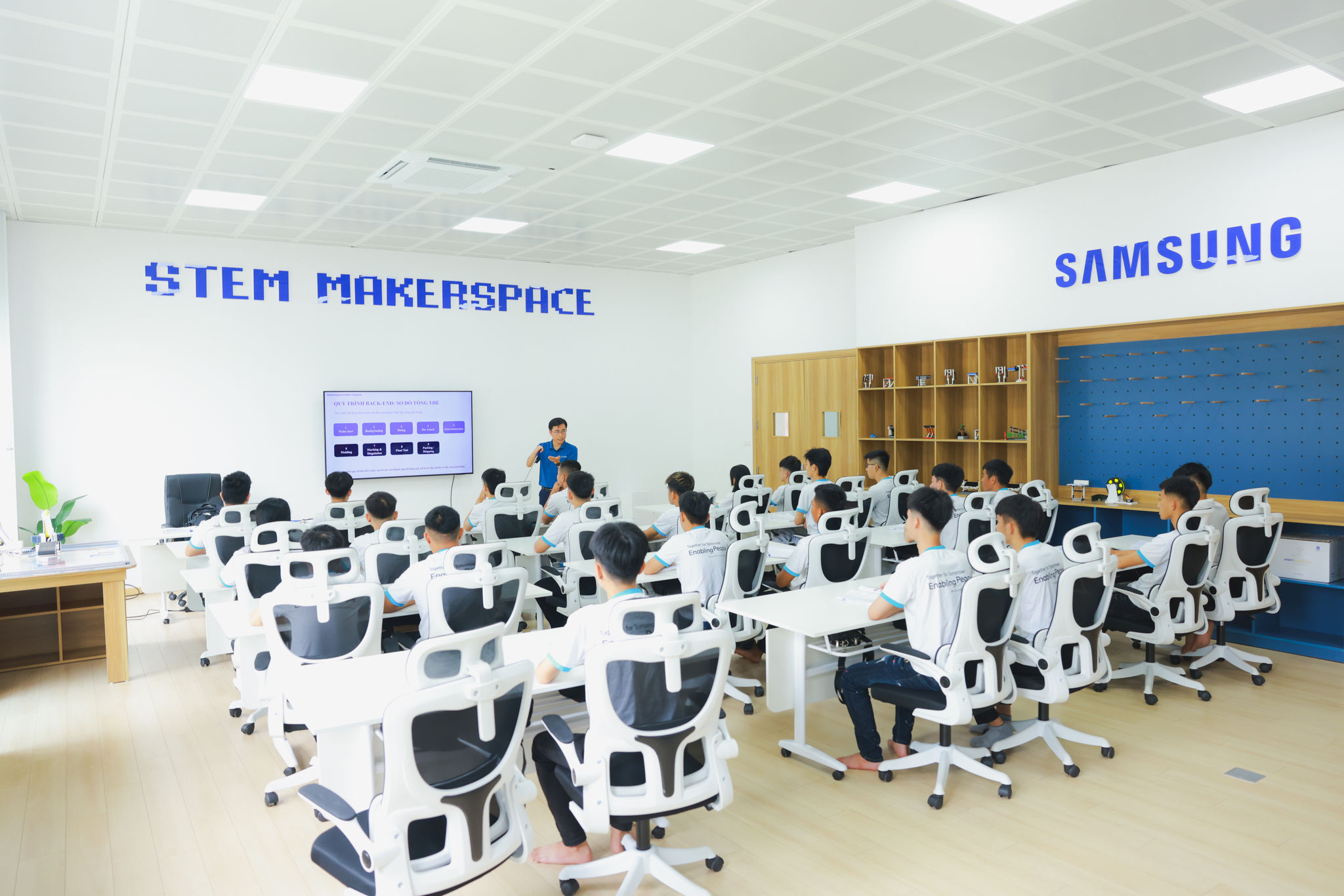
Samsung Innovation Campus (SIC) providing training in core technology fields such as AI, IoT, Big Data, and semiconductors at Thai Nguyen University
Alongside infrastructure, human resources are critical to the development of the semiconductor industry. Thai Nguyen has a particular advantage as a major education and training center, with a network of universities, vocational education institutions, and technical personnel. Thai Nguyen University is implementing semiconductor and AI workforce training programs, promoting STEM and STEAM education, and strengthening instruction in the basic sciences that underpin high technology. Samsung's inauguration of the Samsung Innovation Campus High-Tech Talent Development Center in Thai Nguyen in August 2026 has added another notable link to the development of a high-quality technology workforce in this field.
Building on its electronics base, technology infrastructure, FDI enterprises, educational institutions, and workforce, Thai Nguyen is creating conditions for deeper participation in global semiconductor, electronics, and high-tech value chains. These fields demand substantial resources, advanced technologies, and long-term preparation. The province therefore aims not only to attract more projects, but also to select technologically capable investors, promote technology transfer, develop human resources, and gradually build domestic research, design, and manufacturing capabilities.
Turning advantages into new growth drivers
Across all three product groups, science, technology, innovation, and digital transformation will drive each value chain, turning existing advantages into more technology-intensive, valuable, and competitive products, expanding markets, and advancing socio-economic development. This supports the goal of making Thai Nguyen a modern industrial center with upper-middle incomes before 2030. This is also how Thai Nguyen is translating the spirit of Resolution No. 57-NQ/TW into concrete action.
Strategic technology products are expected to provide Thai Nguyen with "dual drivers", elevating traditional values while creating future ones. Science, technology, and innovation can thus drive rapid and sustainable development, improve growth quality, and lay a firm foundation for socio-economic progress in the new period.